Sales leaders are under more pressure than ever. Pipelines are shrinking. Win rates are falling. Sales turnover is high, and customer retention is low. Companies invest billions in sales training (over $15 billion annually in the U.S. alone) hoping to fix these problems. Yet, research shows only about 34% of organizations effectively measure whether their sales training is working. The result? Missed KPIs, stalled growth, and wasted investment.
It doesn’t have to be this way. In 2026, measuring the effectiveness—and ROI (Return on Investment)—of your sales training program is not just possible, it’s essential. If you’re not measuring, you’re guessing. And guessing is a luxury no revenue leader can afford in a competitive, budget-conscious environment.
In this guide, we’ll walk through a tactical, step-by-step approach to measuring sales training effectiveness. We’ll cover the key metrics and methods to track, how to calculate ROI (including a simple ROI formula you can plug your numbers into), and often-overlooked factors like sales rep turnover and talent retention. We’ll also highlight how outcome-based selling training (the kind of program we champion at revenueify) can be a game-changer for your sales team’s performance and stability.
Let’s get started with the fundamentals of measurement, then build up to advanced ROI calculations and real-world impact.
1. Start with Clear Goals and Baselines
The first step to measuring training effectiveness is defining what success looks like. Without clear goals, you won’t know what to measure. Identify the key outcomes you expect from the training and set specific, measurable objectives for those outcomes. For example, you might aim to increase average deal size by 15% within 6 months or improve win rates by 10 percentage points in the next quarter. Setting concrete targets establishes a reference point for success.
Baseline Assessment: Before training begins, conduct a thorough assessment of your team’s current performance and skills. This could include benchmarking key metrics (last quarter’s sales results, current conversion rates, average deal sizes, etc.) as well as evaluating skills through surveys, quizzes, or role-play observations. The goal is to create a data-driven baseline to compare against later. For instance, if you discover via assessment that your team struggles with negotiating discounts or handling objections, note your starting success rates in those areas. This baseline is critical – you’ll measure the training’s impact by how far you move the needle from this starting point.
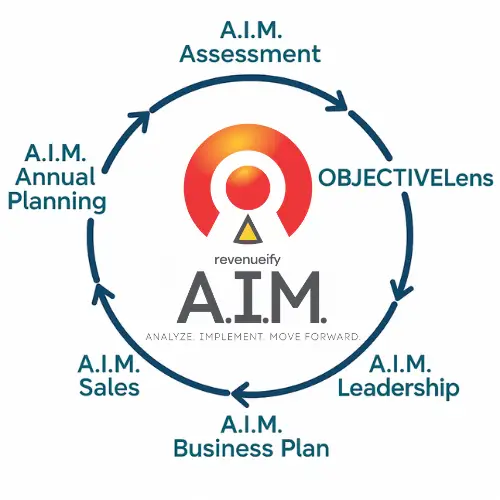
Pro Tip: Consider using a comprehensive diagnostic tool like revenueify’s A.I.M. Assessment (Analyze. Implement. Move Forward) to get a 360° view of your sales organization before training. The A.I.M. Assessment is a data-driven roadmap that helps pinpoint what’s holding your revenue team back and where to invest for maximum ROI. It evaluates your People (talent and hiring process), Processes (systems and alignment with outcomes), Sales Structure (team roles and coverage), and Product Strategy (how well your team positions your solutions). By benchmarking these fundamentals against industry bests, you gain clarity on specific areas to target in training – ensuring that when improvements happen, you’ll be able to measure them. Remember: the solution to performance issues isn’t adding more complexity; it’s gaining clarity on the basics that matter.
2. Track Key Sales Performance Metrics
With goals set and a baseline in hand, the next step is to monitor the Key Performance Indicators (KPIs) that will reveal training impact. These should be directly tied to the objectives you established. Common sales performance metrics to track include:
- Win Rate / Conversion Rate: Are your reps closing a higher percentage of deals after training? An increase in win rate is a clear sign that your training is paying off. For example, if reps used to close 25% of proposals and now close 35%, that’s a measurable improvement attributable to new skills or strategies learned.
- Average Deal Size: Effective training (especially in outcome-focused selling) often results in reps selling more value and bigger solutions. If your average order value or contract size grows post-training, that’s a positive indicator of effectiveness.
- Sales Cycle Length: Track whether the time to close deals is shortening. A streamlined sales process taught in training might help reps move prospects through the pipeline faster, which would reflect in a reduced average sales cycle time.
- Quota Attainment and Revenue per Rep: Measure how many reps are hitting their sales targets now versus before. If previously only 60% of your team met quota and now 80% do, that’s a strong sign the training addressed key skill gaps. Likewise, look at average revenue per salesperson before vs. after training to gauge productivity gains.
- Customer Metrics: Depending on your business, you might also track customer-focused outcomes. For example, improved sales skills can lead to better customer satisfaction or retention (because reps are selling more appropriate solutions and setting better expectations). If your training emphasizes outcome-based selling or customer-focused selling, you should see improvements in metrics like customer renewal rates or upsell/cross-sell revenue with existing clients.
It’s important to align the training with these specific performance metrics. Research by Gartner found that organizations linking sales training to clear performance KPIs enjoyed up to 29% higher revenue growth compared to those that didn’t tie training to concrete metrics. In short, what gets measured gets improved. By choosing the right metrics to monitor, you can quantitatively demonstrate the training’s impact on sales results.
3. Measure Behavior Change and Skill Adoption
Not all training benefits show up in the revenue numbers overnight. Some improvements are more subtle but lead to big results over time. This is why you should also measure behavioral changes and skill adoption – the leading indicators that your training is taking root.
Track whether your sales team is actually using the new techniques or knowledge from training in their day-to-day work. Some ways to do this:
- Role-plays and Certifications: Incorporate assessments during and after training. For example, have reps practice key parts of the sales process (such as delivering a value proposition or handling a common objection) and score them. Did their abilities improve compared to pre-training? Many programs (including our own at revenueify) use certifications or capstone projects to ensure reps can demonstrate their new skills in realistic scenarios. High post-training assessment scores or certification rates are one indicator of training effectiveness.
- Manager/Coach Observations: Have sales managers or coaches observe reps on actual sales calls or in meetings after training. Are reps applying the taught techniques (e.g., using the new customer-focused questioning methodology they learned)? Qualitative feedback and scorecards from managers can help quantify behavior changes.
- Sales Activity Metrics: Look at pipeline activity data. For instance, if your training focused on prospecting or discovery, do you see an increase in the number of new opportunities generated or the percentage of prospects advancing to later stages? If it focused on negotiation skills, do you see fewer discount concessions or higher proposal acceptance rates?
Improvements in these areas often precede financial results and signal that the training content is being adopted effectively. In fact, changes like more effective discovery calls or better objection handling are often the first signs of training success, leading to downstream improvements in win rates and revenue. To capture this, you might use sales call recording analytics, customer surveys, or peer feedback. For example, if customers start mentioning how helpful and consultative your reps have become, that’s a strong qualitative indicator that the training hit the mark.
Don’t forget to gather feedback from the reps themselves. Ask your sales team for their input on the training: what worked, what didn’t, and which skills they feel more confident in now. Their on-the-ground perspective can highlight early wins or lingering challenges, guiding you on where to provide additional coaching or support. Plus, involving reps in the evaluation process shows that you value their development – which can boost morale and engagement.
4. Monitor Sales Rep Retention and Talent Acquisition
Here’s where we get a bit edgy: The effectiveness of a sales training program isn’t just about short-term sales figures. It can also make or break your sales team’s stability. In an ultra-competitive job market, a great training program can be a magnet for top talent and a glue that keeps your best salespeople from leaving.
Track your turnover rates before and after training. Sales rep turnover in many B2B companies is notoriously high – averaging around 35% annually. That level of churn is extremely expensive, not to mention disruptive to your pipeline. If your sales training program is effective, one of the side benefits should be a drop in voluntary turnover. Why? Because reps who feel more competent, successful, and supported in their professional growth are less likely to quit. Conversely, poor training (or none at all) contributes to frustration and attrition. In fact, a LinkedIn study found that nearly half of B2B sales orgs have 30%+ rep turnover each year, and it’s getting worse as reps jump ship for better opportunities.
Calculate the cost of turnover. What does training have to do with retention? Potentially a lot. High turnover is a silent profit killer. You lose experienced sellers, you incur costs to hire and ramp new ones, and you miss sales in the meantime. Consider three components of turnover cost:
- Recruiting & Onboarding Costs: Replacing a rep can cost around 1.5× their annual base salary in recruiting, hiring, and training expenses. Think of recruiting ads, HR time, interview hours, signing bonuses, and training a new hire – it adds up.
- Lost Sales During Vacancy: It takes 189 days on average to fill a sales role. That’s over 6 months where territory coverage is incomplete, and deals are delayed or lost. If you know your average annual revenue per rep, you can estimate the revenue not generated during those ~6.2 months. (For a rough calc: divide a rep’s annual new business revenue by 365, multiply by 189 to get lost revenue per vacancy.) [
- Lost Sales During Ramp-Up: Even after a new rep is hired, they won’t be fully productive on Day 1. On average, it takes about 3 months (90 days) for a new sales rep to reach full productivity (it can be longer for more complex sales). During ramp-up, they might operate at ~50% capacity, meaning additional lost sales. Using industry benchmarks, that’s roughly 48.5 selling days of productivity lost per rep hire. Multiply that by your average daily revenue per rep to quantify the ramp-up cost.
Now add those up, and you have a sense of the annual cost of sales rep turnover for your organization. It’s often staggering – easily tens or hundreds of thousands of dollars per departing rep, when you factor in hiring costs and lost sales.
A world-class training program can significantly reduce those costs. By improving rep engagement and success, outcome-based sales training has been shown to cut sales rep turnover rates by as much as 50% in many organizations (our own clients have seen these results). Let’s say your turnover was 30% and you invest in training that cuts it to 15%. If you previously lost 3 out of 10 reps a year and now only lose 1.5 out of 10 (on average), that’s huge. You save the company not only the direct hiring costs for those retained reps, but also preserve their relationships with customers and all the pipeline they would have taken with them. Fewer vacant territories = more revenue. More tenured, experienced reps = better sales outcomes. It’s a compounding ROI that often rivals the direct revenue impact of training. In essence, training can pay for itself by plugging the leak in your sales bucket.
Also, don’t overlook talent attraction. In a job market where salespeople have many options, offering exceptional training and development can differentiate you as an employer. Ambitious sales professionals want to grow their skills. If your company is known for investing in its people with cutting-edge, outcome-focused training, you’ll attract higher-caliber candidates (and ramp them up faster). Over time, this boosts the overall productivity of your team and reduces costly vacancies. While “attractiveness to talent” can be harder to quantify, you can track metrics like employee engagement scores, referral rates (how often your team refers other talented salespeople to join), and time-to-fill for sales positions. Improvements in these areas post-training investment indicate another facet of ROI – a stronger, more stable sales force.
5. Calculate the ROI of Your Sales Training Program
Once you’ve gathered data on all the relevant changes – improved sales metrics, reduced turnover costs, etc. – it’s time to compute the return on investment (ROI). ROI gives you a concrete percentage that shows whether the gains from training outweigh the costs.
Start with the basics: The straightforward ROI formula is:
ROI (%) = ((Total Benefits – Total Costs) / Total Costs) × 100In our case, Total Benefits would include the financial gains from the training (e.g. additional revenue, increased profit margins, cost savings from fewer turnovers, etc.), and Total Costs include all expenses of the training (training fees, materials, travel, reps’ time off the floor, etc.).
For example, suppose you spent $100,000 on a sales training program in a year. Through improved performance, your team generated an extra $300,000 in revenue that can be attributed to the training (via higher win rates and bigger deals), and you also saved $150,000 in costs by retaining more reps than usual (avoiding replacement costs and lost sales). The total benefit is $450,000. Using the formula, ROI = ((450,000 – 100,000) / 100,000) × 100 = 350% ROI. In other words, the training paid for itself 3.5 times over.
Now, let’s focus specifically on the ROI from reducing turnover, since this is often overlooked. You can use an ROI of Training on Turnover calculator as follows:
- Calculate your annual sales turnover cost (before training). As discussed, sum up the costs of replacing lost reps, the revenue lost during their 6.2-month vacancy, and the revenue sacrificed during new hires’ ramp-up period. (If you’re not sure, the formulas above or revenueify’s team can help you estimate this using industry benchmarks and your data.)
- Estimate the savings after training reduces turnover. If your training program can realistically cut turnover by let’s say 50%, then cut your annual turnover cost in half. That 50% of previously lost costs is now savings or benefit due to the training. For example, if you calculated that turnover was costing you $1 million per year and you halved it, you’re saving $500,000 annually.
- Compare against the training investment. How much are you spending on training programs per year? Continuing the example, if your training program costs $200,000 per year, but saves $500,000 in reduced churn costs, that’s a net $300,000 gain even before factoring in any extra sales your better-trained reps are closing.
- Compute the ROI Percentage: Use the formula above. With $500,000 in benefits and $200,000 cost: ROI = ((500,000 – 200,000) / 200,000) × 100 = 150% ROI. That means you get $1.50 back for every $1.00 spent on training just from lower turnover.
And remember, that 150% is in addition to the new revenue your better-skilled, more effective sales team is bringing in as a result of training. When you combine all these factors, it’s not uncommon for well-executed sales training programs to achieve 300%+ ROI. In fact, companies that rigorously calculate training ROI are 60% more likely to secure bigger training budgets for the next year – because the data makes a convincing case.
6. Review, Refine, and Continuously Improve
Measuring the effectiveness of sales training isn’t a one-and-done task. To truly maximize ROI, make it an ongoing process. Set up regular checkpoints (e.g., 30-60-90 days after training, and quarterly thereafter) to review the metrics we discussed:
- Are the initial performance gains sticking, or do you see old habits creeping back?
- Which metrics are improving, and which aren’t? For example, maybe win rates are up but average deal size is flat – that might signal the need for a refresher on value selling or negotiation techniques.
- Has turnover remained low, or do you see signs of it creeping up again? If reps are still leaving, dig into exit interviews or performance data to understand why. Perhaps additional coaching or adjustments to compensation plans (or other support beyond training) are needed.
Use these insights to refine your training program. The best organizations follow a continuous improvement approach: gather feedback, analyze performance data, and tweak the training content or coaching methods accordingly. For example, if you find that a specific module didn’t resonate or move the needle (say, prospecting emails are still subpar), revisit it and improve the training in that area. On the flip side, if you see massive improvement in one area (say, negotiation skills), figure out what worked – and double down on it or share those best practices across the team.
Stay agile and keep aligning with business goals. Sales trends in 2026 are rapidly evolving (hello, AI tools and virtual selling!). Regularly ask: Are we training the right skills for the current market?Organizations that continuously adapt their sales training to match market changes and new strategies see much better long-term results. By staying proactive and iterative, you ensure that your training investment keeps paying dividends over time, instead of being a one-hit wonder.
Conclusion: From Training to Sustained Results
Measuring the effectiveness of sales training programs comes down to this: Connect your training to real outcomes and track them relentlessly. By setting clear goals, establishing baseline metrics (with a data-driven assessment like the A.I.M. Assessment), and monitoring both performance and people metrics, you’ll gain a 360° view of your training’s impact. This isn’t just about proving ROI to appease the CFO (though it will); it’s about creating a cycle of continuous improvement. When you know what’s working and what isn’t, you can make smarter decisions on where to reinforce skills, what content to update, and how to support your team better.
In 2026’s competitive landscape, effective sales training is a strategic advantage – but only if you can measure it. The good news is that a well-designed, outcome-based training program will show up in the numbers. Companies with robust sales training have been shown to experience 218% higher revenue per employee on average. Our own clients have seen 10%+ margin growth and double their recurring revenue within 18 months after implementing a comprehensive sales enablement program grounded in continuous measurement and coaching. Those are the kinds of results that turn training from an expense into an investment that pays for itself many times over.
Ultimately, measuring the effectiveness of sales training programs is about accountability and opportunity. It’s about holding your training initiatives to the same performance standards as any other critical business investment. When you do that, you don’t just get proof of ROI – you get the insights needed to make your sales team truly unstoppable.
Remember: What you don’t measure, you can’t improve. But when you do measure and act on those findings, you create a growth-oriented sales culture where everyone wins – your reps, your customers, and your bottom line. Now that’s effective sales training.
Want to start small with your Sales Training investment to ensure the effectiveness of your Sales Training Program?
Check out some of our upcoming Group Training Sessions to test the waters.

Outcome Based Selling Sales Training Course-REVUP Achiever Q2 2026